


Trip to the Dolomites
Trip to the Dolomites
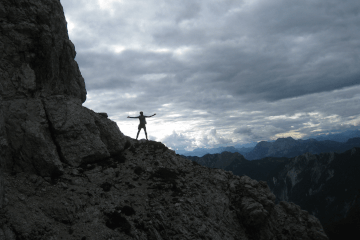
The Dolomites have been a UNESCO World Heritage Site since 2009 due to their exceptional natural beauty. They are located in the northern part of Italy, in South Tyrol, where 18 peaks over 3000 meters can be found. In each of the nine areas, we can find steep walls, wide, long and deep valleys and numerous towers that will take your breath away. For this reason alone, it is worth taking a trip to the Dolomites .
Access
But that's not all, because in the Dolomites the view is not everything, you can also actively participate in hiking, cycling, walking on protected paths and of course climbing. But take it slow. How do we get to the Dolomites? Tine Mihelič listed three directions in his guide. For the Gorenjci, the closest route is via the Karavanke to Lienz and further towards Bruneck to the valley that suits us. The second direction is via Tolmezzo and numerous passes. This is more for romantics. The third direction is for the Primorska region and is the arrival from the sea, southern side.
Activities
As mentioned, there are many things to do in the Dolomites. We are mainly interested in hiking and climbing. Regarding the latter, we will focus on two areas that are the most visited in the summer. Of course, there are other areas, but... In the Sella group you can climb from the southern part of the Marmolada all the way to the walls above the Gardena Pass. Here you can focus on the towers above the Sella Pass, the walls of Piz Ciavazes, Piz Boe, Sasso Lungo. There is excellent climbing terrain near Cortina in the walls of Tofane di Rozes, Cinque Torri, the walls above the Falzarego Pass. Of course, not far from Cortina are the walls of Tre Cime di Lavaredo or Treh Cin.
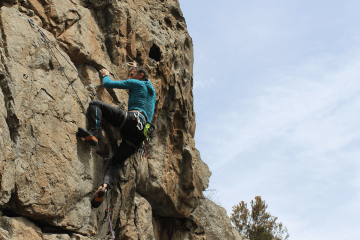
In the Dolomite walls, it is recommended to climb with double ropes , because you never know when the terrain or the weather will surprise you and you will have to descend quickly if you do not want major problems. On easier climbing, you will not find much protection, so it is necessary to have a friend and a pin with you. However, since the rock is really excellent, it offers numerous eyes and prongs, so harnesses will come in very handy. With the latter and with extended sets , you will be able to effectively reduce the problem of friction over numerous prongs and towers. If you decide to go for shorter routes, a smaller backpack will help you, which will not hinder you and cause excess weight, like a larger backpack.
For hikers
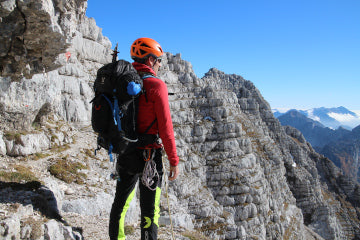
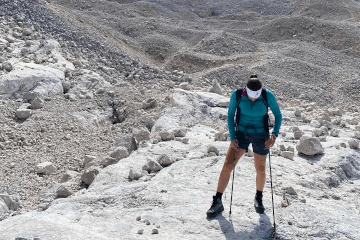
The Dolomites are a true paradise for hikers. They offer beautiful views, new experiences, well-marked trails, easy access to trails and comfortable accommodation in the valleys. There are different difficulty levels available; for those with less fitness and those who would like to try their hand at difficult and long via ferratas. For the latter, you will definitely need a self-protection kit , a climbing harness . If you don't want to injure your skin with potentially damaged steel cables, you should also wear gloves . In case you have a child or a member with less self-confidence with you, we recommend a guide rope .
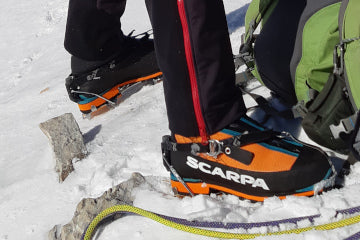
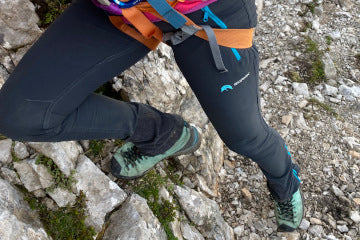
We definitely recommend good footwear , as the trails are quite busy and therefore in many parts are smooth and covered with treacherous sand and rocks. Many of the hills will be easier to reach with the help of hiking poles , a comfortable backpack , and comfortable socks .
For weather changes
For both mountaineers and hikers, the Dolomites can be very unpredictable. The very next day, snow can fall on the peaks and the valleys can be cold. So bring a warm top layer , a mid layer and a quality first layer to protect you from the cold. Even if the weather is nice, you should also pack a windbreaker and a first aid kit in your backpack.
But when it's really hot... pants and shirts made of active materials that allow for quick sweat removal and quick drying will definitely help. Don't forget sunscreen and plenty of fluids.
Good luck and have lots of fun!